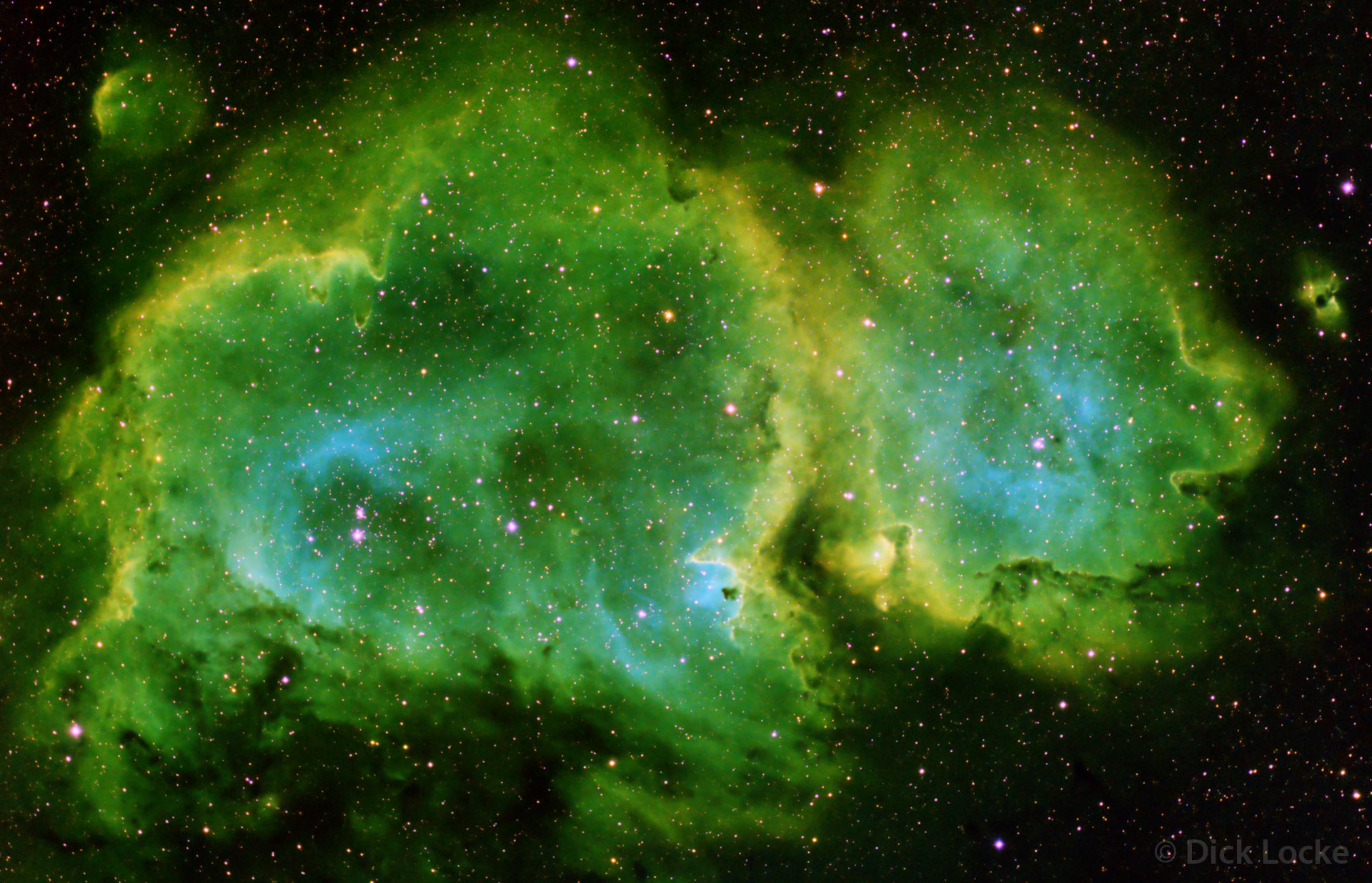
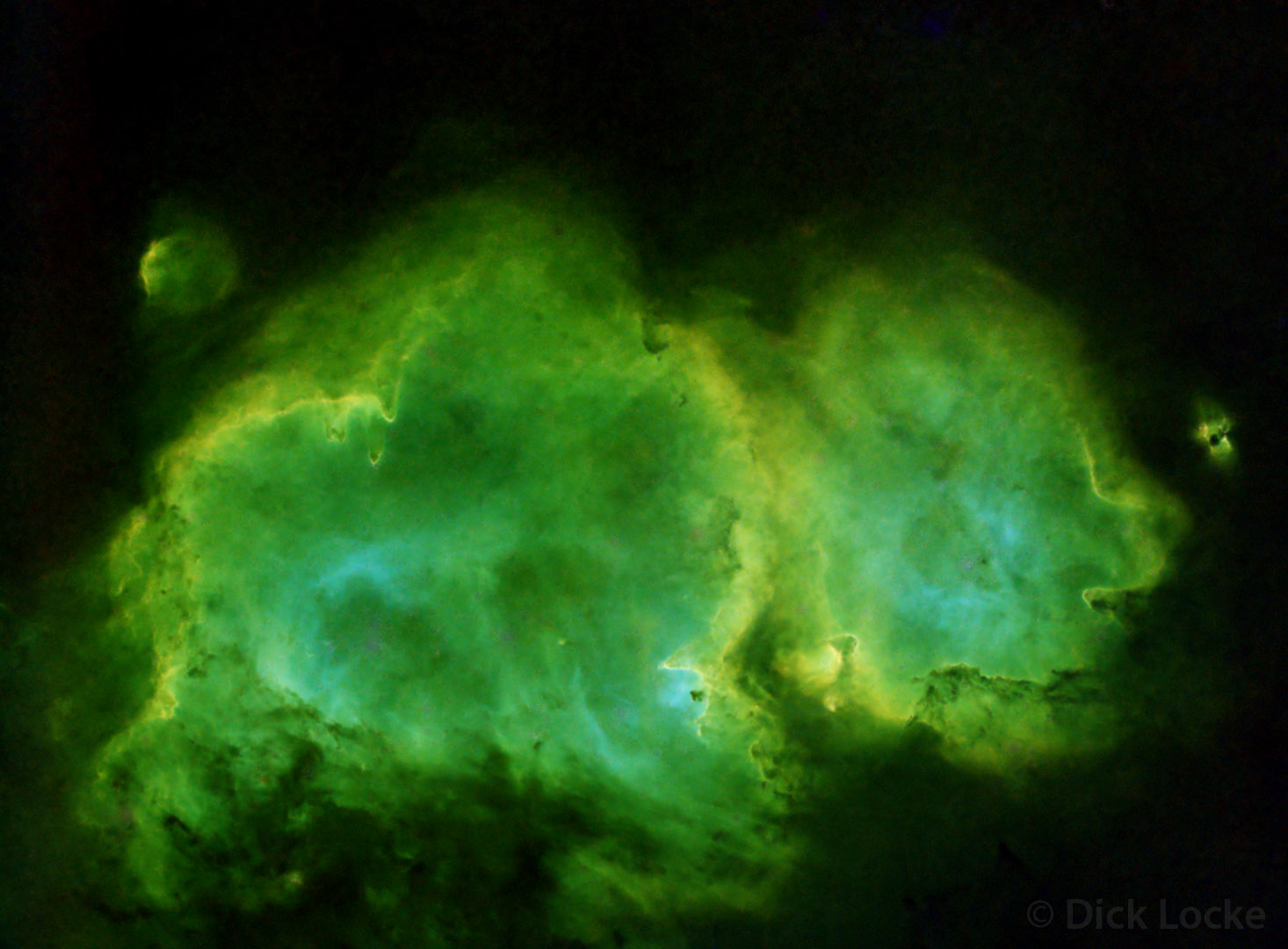
Soul Nebula IC 1848 - False Color Narrowband
These objects are in Cassiopeia, near the Double Cluster; click here to see a wide-angle pictures of the Heart & Soul. The shoe, in this case nebula IC 1848, just about fits. This is usually called the soul nebula (to go with the heart), but it goes by several other names as well. To me it looks like a footprint.
Explanation lifted from APOD (*): Stars are forming in the Soul of the Queen of
Aethopia. More specifically, a large star forming region called the Soul Nebula
can be found in the direction of the constellation Cassiopeia, who Greek
mythology credits as the vain wife of a King who long ago ruled lands
surrounding the upper Nile river. The Soul Nebula houses several open clusters
of stars, a large radio source known as W5, and huge evacuated bubbles formed by
the winds of young massive stars. Located about 6,500 light years away, the Soul
Nebula spans about 100 light years and is usually imaged next to its celestial
neighbor the Heart Nebula (IC 1805).
This SHO (Hubble Palette = Sulfur/Red, Hydrogen/Green, and
Oxygen/Blue) processing of the Soul (or Sole) Nebula features 13.8 hours total
exposure from the back yard December 2020 and January 2021.
Equipment: SBIG ST-8300 CCD camera with the FW8-8300 filter
wheel, Astrodon narrowband 36mm filters, the Takahashi FSQ-85 telescope at
native 450mm, AP 900GTO mount. Guiding via PHD, an ASI462MC camera, and a
Sky-Watcher EVOGUIDE 50ED guide scope mounted to the finder bracket.
Processed (generally) using the recommended PixInsight workflow
in Keller’s book with final processing in Photoshop.
74x5min = 6.2 hours H-alpha
39*5min = 3.25 hours S-II
53*5min = 4.4 hours O3
13.8 hours total exposure
(*) https://apod.nasa.gov/apod/ap160228.html
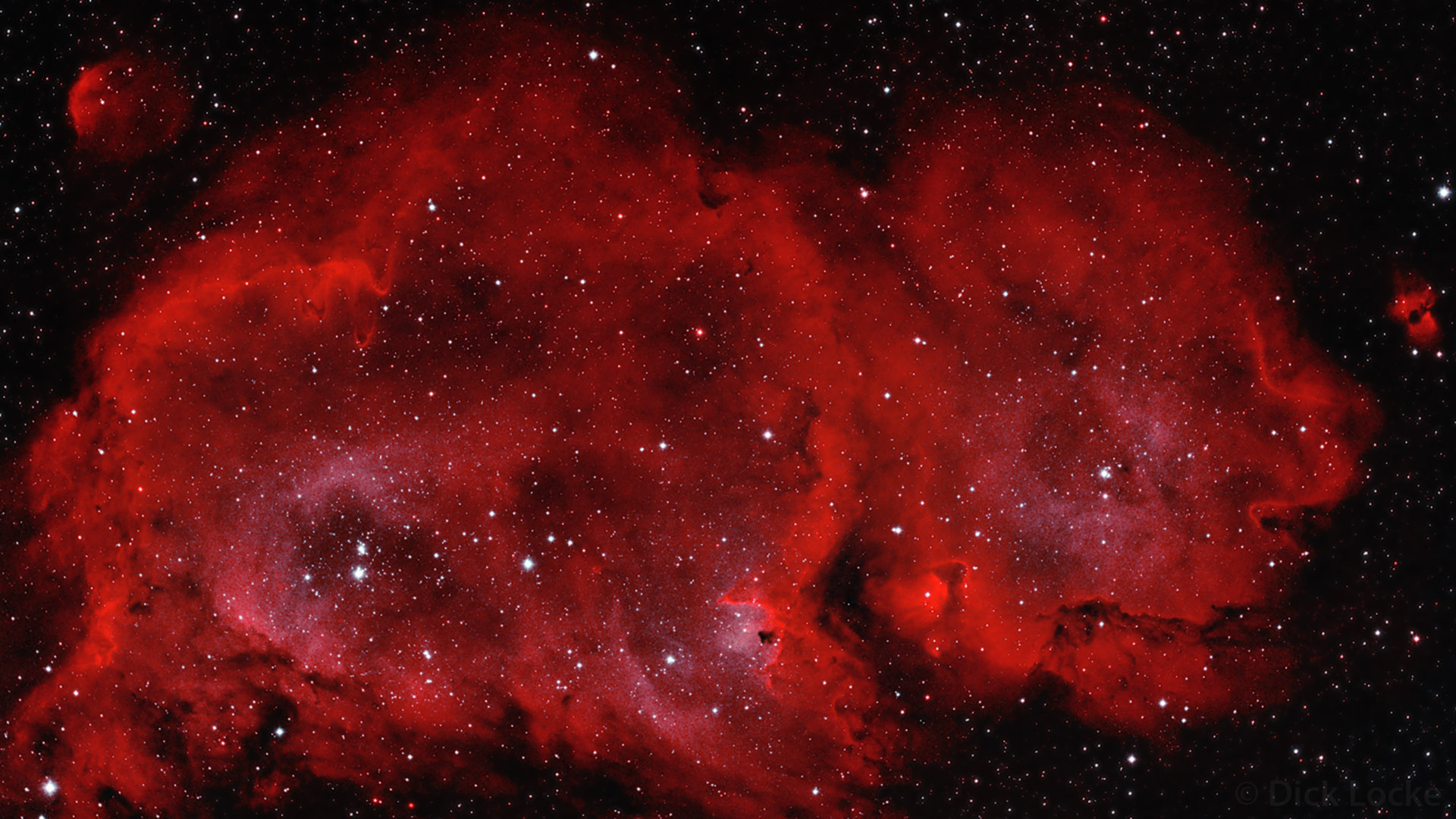
Here's a "natural color" version of the Soul/Sole Nebula. It's based on images through specialized astronomy "narrowband" filters; Hydrogen and Oxygen emissions in this case. H is red; O is blue & green. It represents about 6 hours of H-alpha (see H-alpha only image below) and 4 hours of Oxygen filtered data collected late 2020 from the back yard. FSQ 85 scope, no reducer, ST-8300M camera.
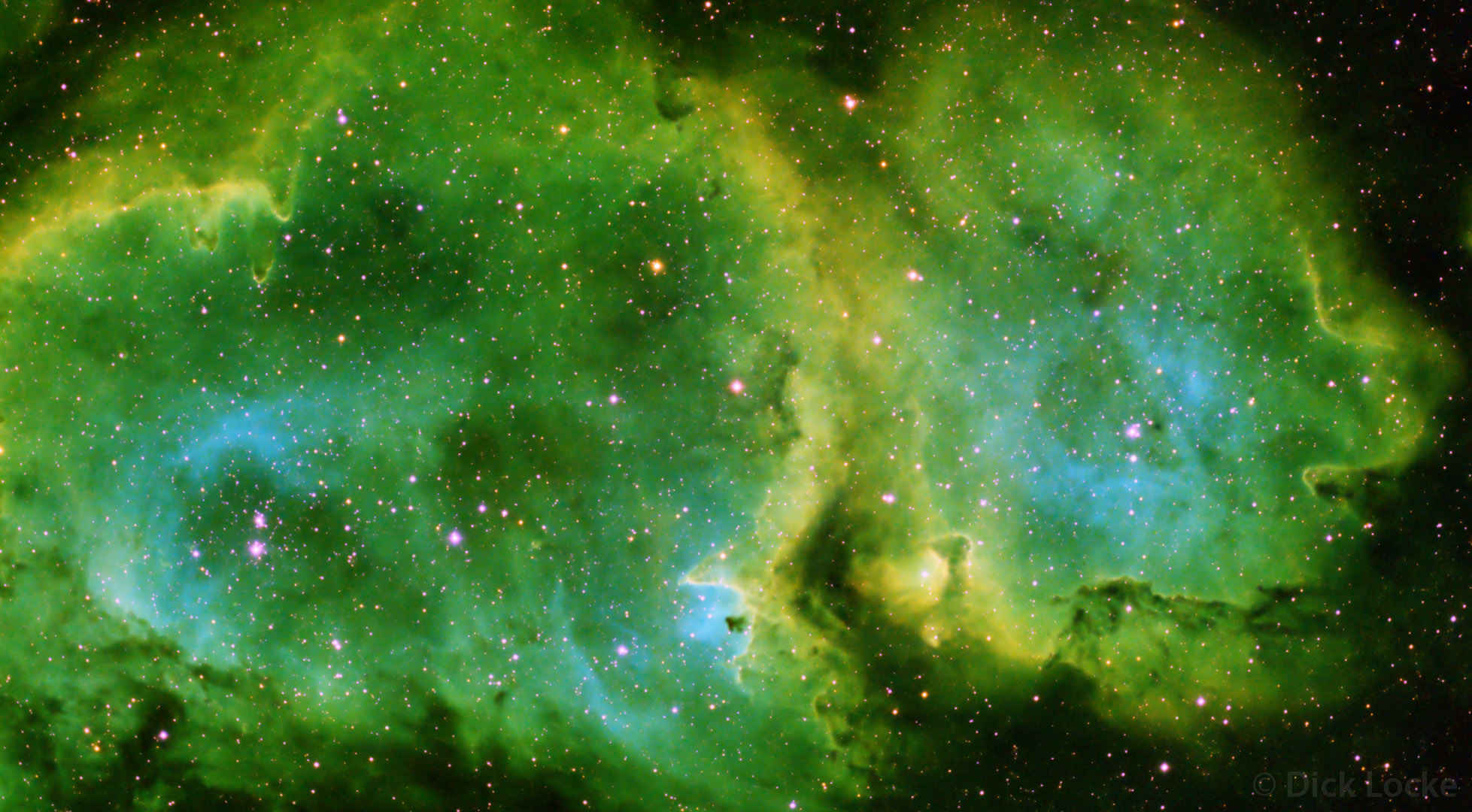
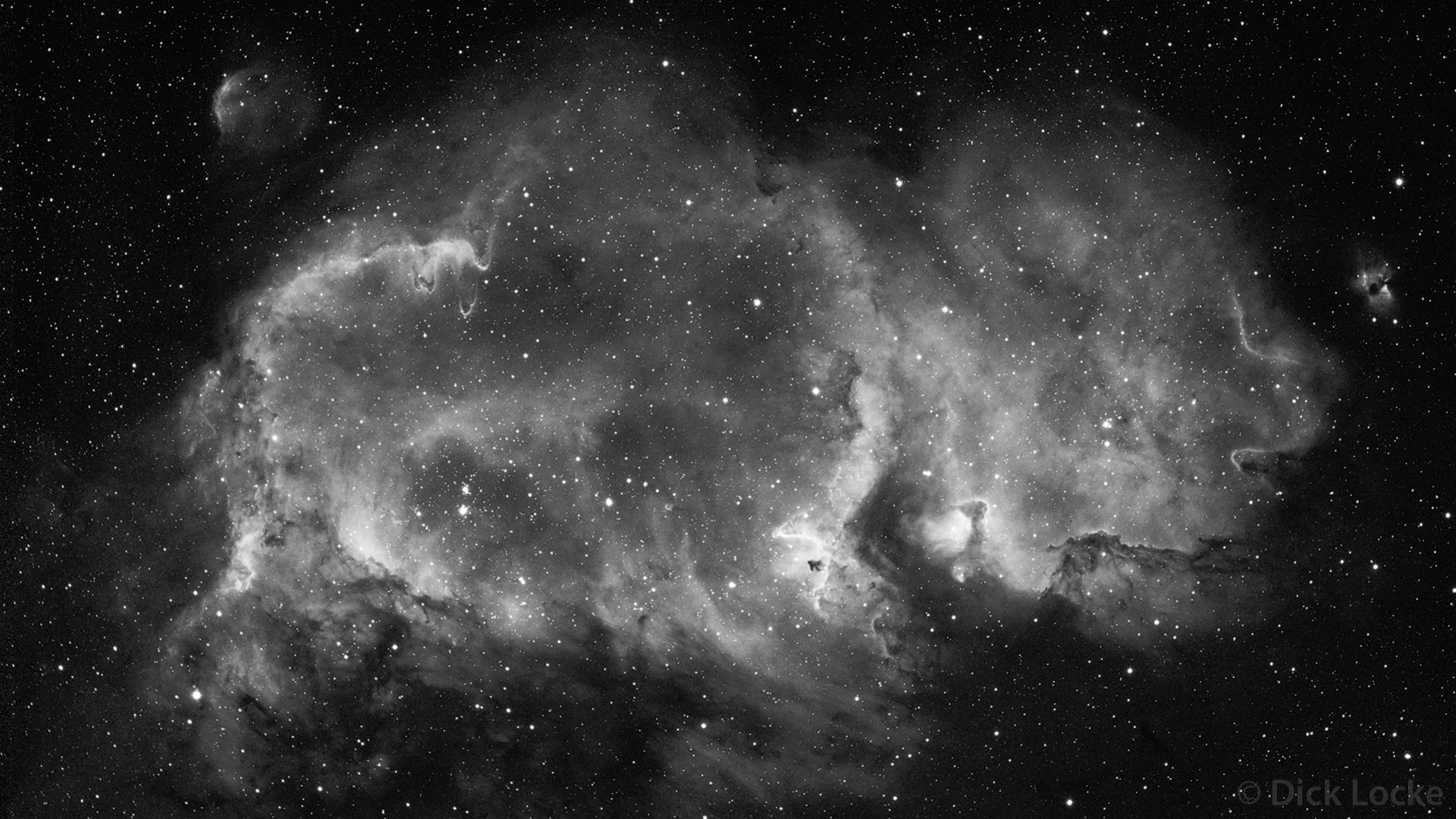
The upper left bright nebula is kind of it's own thing; Sharpless 198 or Lynd's Bright Nebula (LBN) 669. The image was captured as over 70 exposures of 5 minutes each for a total of 6 hours, using my 450mm FSQ 85 scope and ST-8300M monochrome camera with a H-alpha filter from the back yard in late 2020.
...but used Starnet++ to remove stars
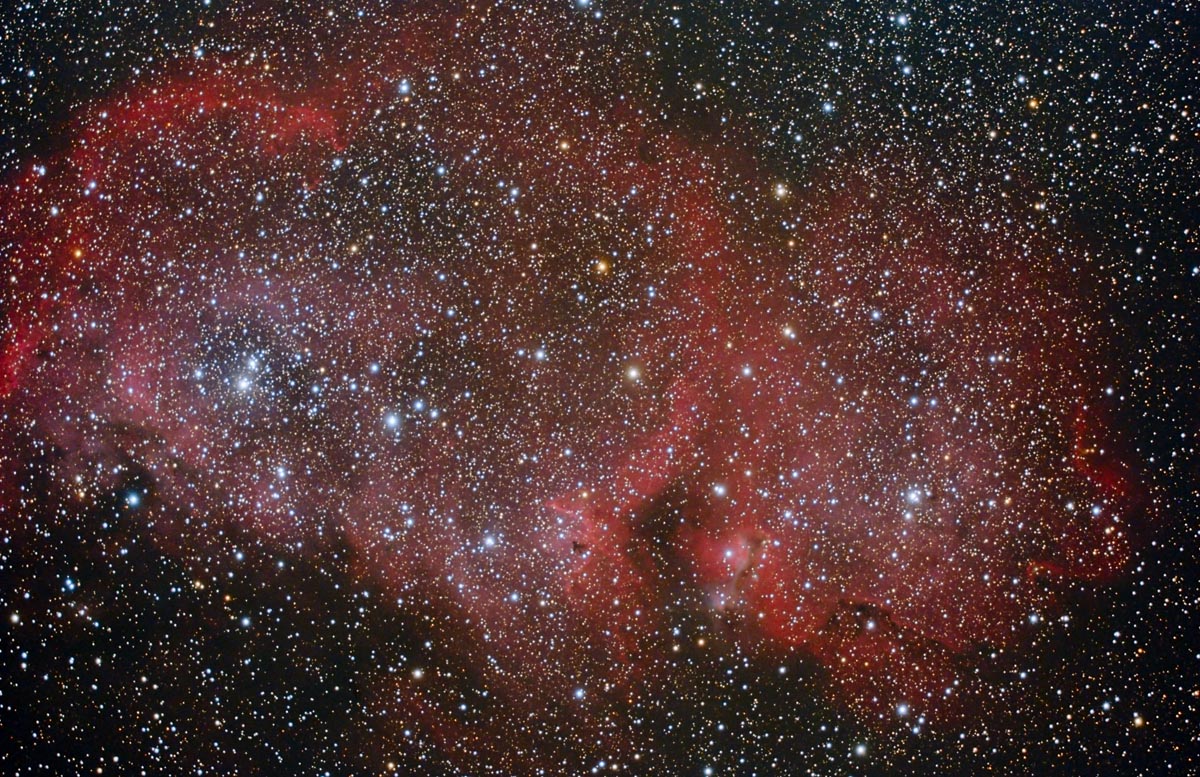
This is only 22 * 5 min., or 110 minutes, exposure, December 2010 from the Davis Mountains. Takahashi TOA 130 Telescope (a 5" APO refractor telescope) with the reducer, AP 900GTO mount, QHY8 CCD Camera. Other pictures from the camera are are here. Images processed using my Astronomy Image Processing Workflow. Transparency wasn't great during this trip, and I had to exclude another 9 "soul" frames from another night due to poor quality.

This is the middle of the heart nebula, IC 1805, in Cassiopeia's winter Milky Way. The heart a little too big to fit the whole thing through my current imaging rig (see a wider view below). The round-ish, bright area on the right includes IC 1795 and NGC 896. The nice collection of yellow stars lower left of IC 1795 is open cluster Tombaugh 4, a feature is not visible on many other images of the heart I see on the web. There's a fair amount of blue reflection light shown in middle of the heart.
The above is about 3 hrs exposure, December 2010 from the Davis Mountains. Details: 34 * 5 min = 170 minutes total exposures. Takahashi TOA 130 Telescope (a 5" APO refractor telescope) with the reducer, AP 900GTO mount, QHY8 CCD Camera. Other pictures from the camera are are here. Images processed using my Astronomy Image Processing Workflow. Scroll down to see wider-angle versions.
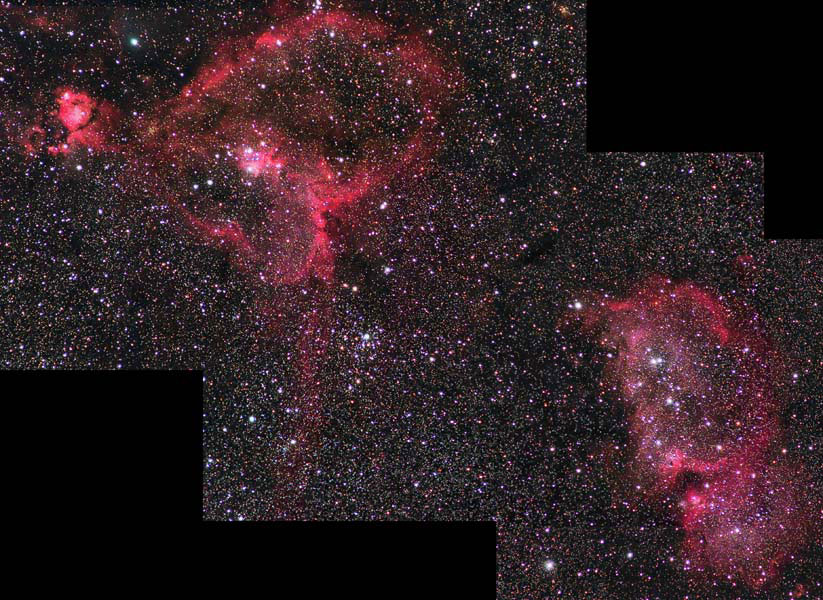
IC1805 and IC1848 Images - The Heart (left) and Soul Nebulae. IC 1805 is only about 6 degrees from the Double Cluster. IC 1848 is also known as the "sole" or "baby" nebula. This is the combination of 3 different sets of pictures using a 300mm camera lens. The wider field of view on that lens was needed for my comet pictures from this night, and I decided to stick with the 300mm all night to get to the heart and soul of the universe. These objects are too wide to fit into a single shot with my telescope Takahashi TOA 130 & DSLR. See below for the soul.
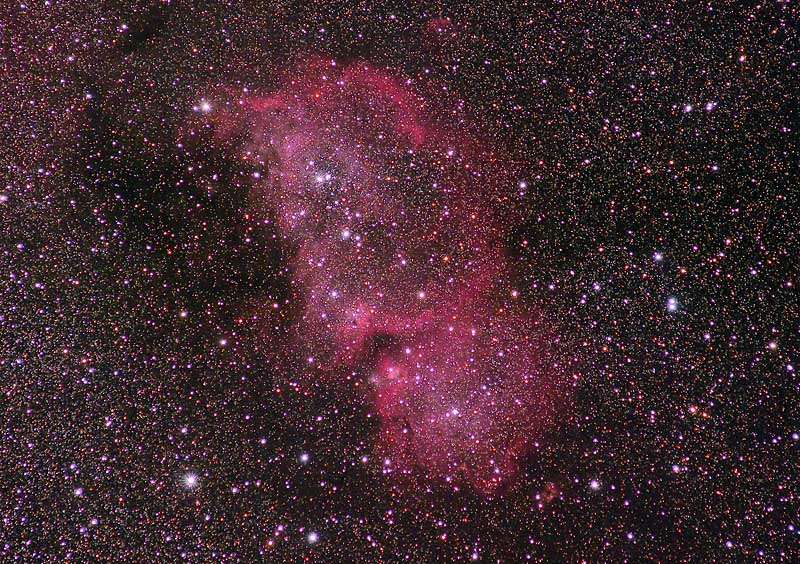
Also known as the baby nebula and the sole (as in shoe) nebula. Maybe I can start a trend and call it "The Footprint Nebula" See below for the heart.

Officially known as IC 1805. Unofficially dubbed The Heart Nebula, The Valentine Nebula. IC1795 is on the bright area to the right of the heart. This is between Cassiopeia and Perseus.
See top of page for the newer prime focus pic.
Explanation: Is the heart and soul of our Galaxy located in Cassiopeia? Possibly not, but that is where two bright emission nebulas nicknamed Heart and Soul can be found. The Heart Nebula, officially dubbed IC 1805 and visible above on the right, has a shape reminiscent of a classical heart symbol. Both nebulas, shown above in false color, shine brightly in the light of energized hydrogen. Several young open clusters of stars populate the image and are visible above in and around the nebula centers. Light takes about 6,000 years to reach us from these nebulas, which together span roughly 300 light years. Studies of stars and clusters like those found in the Heart and Soul Nebulas have focused on how massive stars form and how they affect their environment.
Photographic Info: ISO 800 Canon EOS 20Da, Nikon 300mm f2.8 ED AIS lens with adapter at f4 with flats and darks. Losmandy G11, STV guiding though the Takahashi TOA 130 telescope. Comments: I think my focusing was pretty good, but I definitely get red and blue smearing around bright stars at f4 with this lens. This is a well-regarded lens, but it isn't perfect by any means. It makes me appreciate how good the Takahashi optics really are! Though it's hard to tell at the relatively short focal length, guiding seemed to be very good this night. I think part of the reason may have been a slightly more balanced load than my normal setup. The 300 mm lens mounted on losmandy rings weights a bit more than my guidescope. I may try to weight the guidescope next time I'm out to see if that helps smooth guiding at 750 or 1000 mm focal lengths. I used this Astronomy Image Processing Workflow.
Heart: 16x4 = 64 minutes, plus 11x4=44 minutes re-orientation = 110 minutes total exposure
Soul: 20x4 = 80 minutes total exposure.
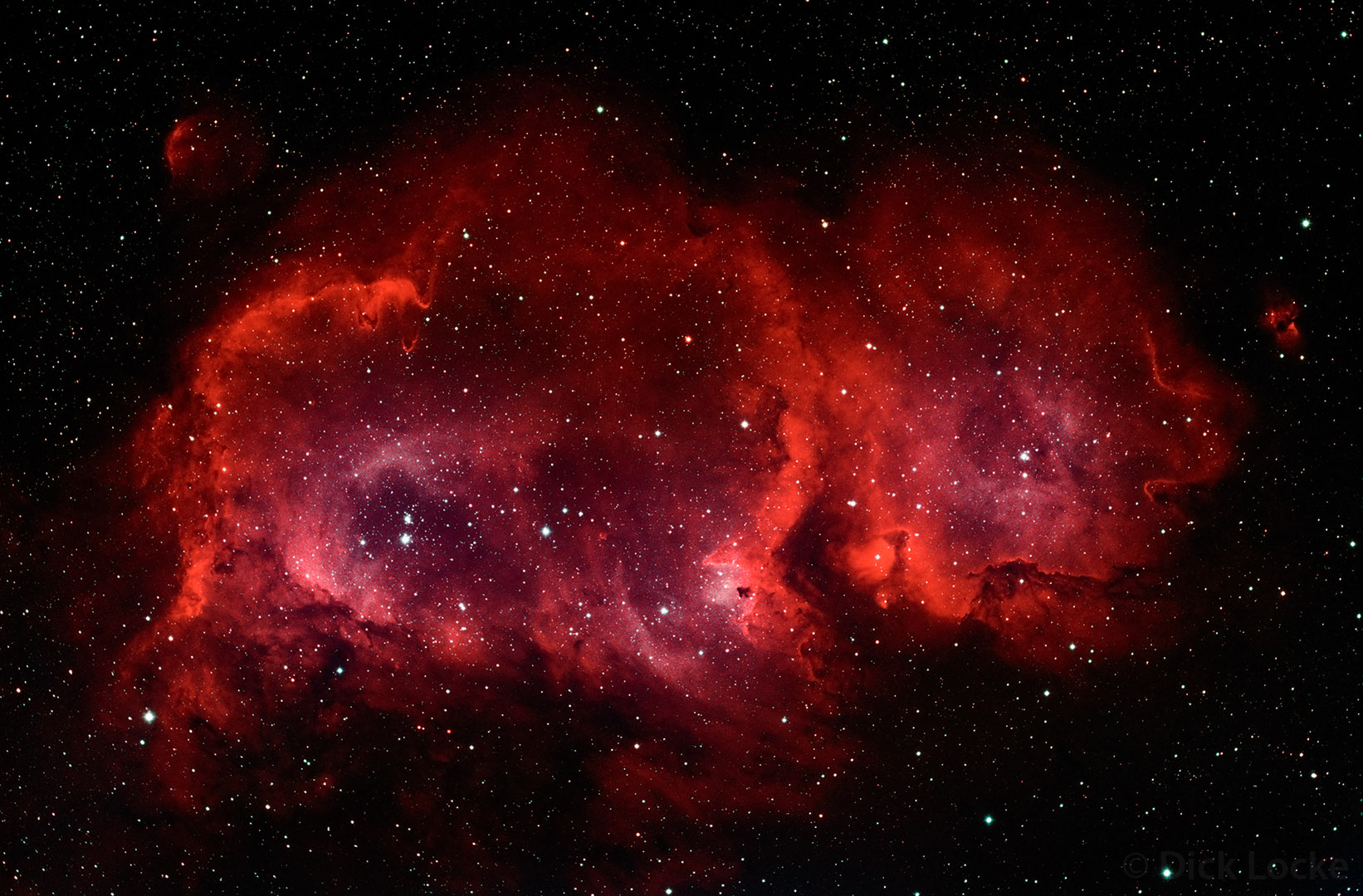
Here's a "color" version of the Soul/Sole Nebula. It's based on images through specialized astronomy "narrowband" filters; Hydrogen and Oxygen emissions in this case. H is red; O is blue & green. It represents about 6 hours of H-alpha (see below) and 4 hours of Oxygen filtered data collected late 2020 from the back yard. FSQ 85 scope, no reducer, ST-8300M camera. I reprocessed a version pretty much from scratch in PixInsight and that version is presented earlier.
The Double Cluster is nearby, this double cluster pic has a bit of the Heart. See here:
Copyright © by Dick Locke. All Rights Reserved.
Contact and Image Use Information