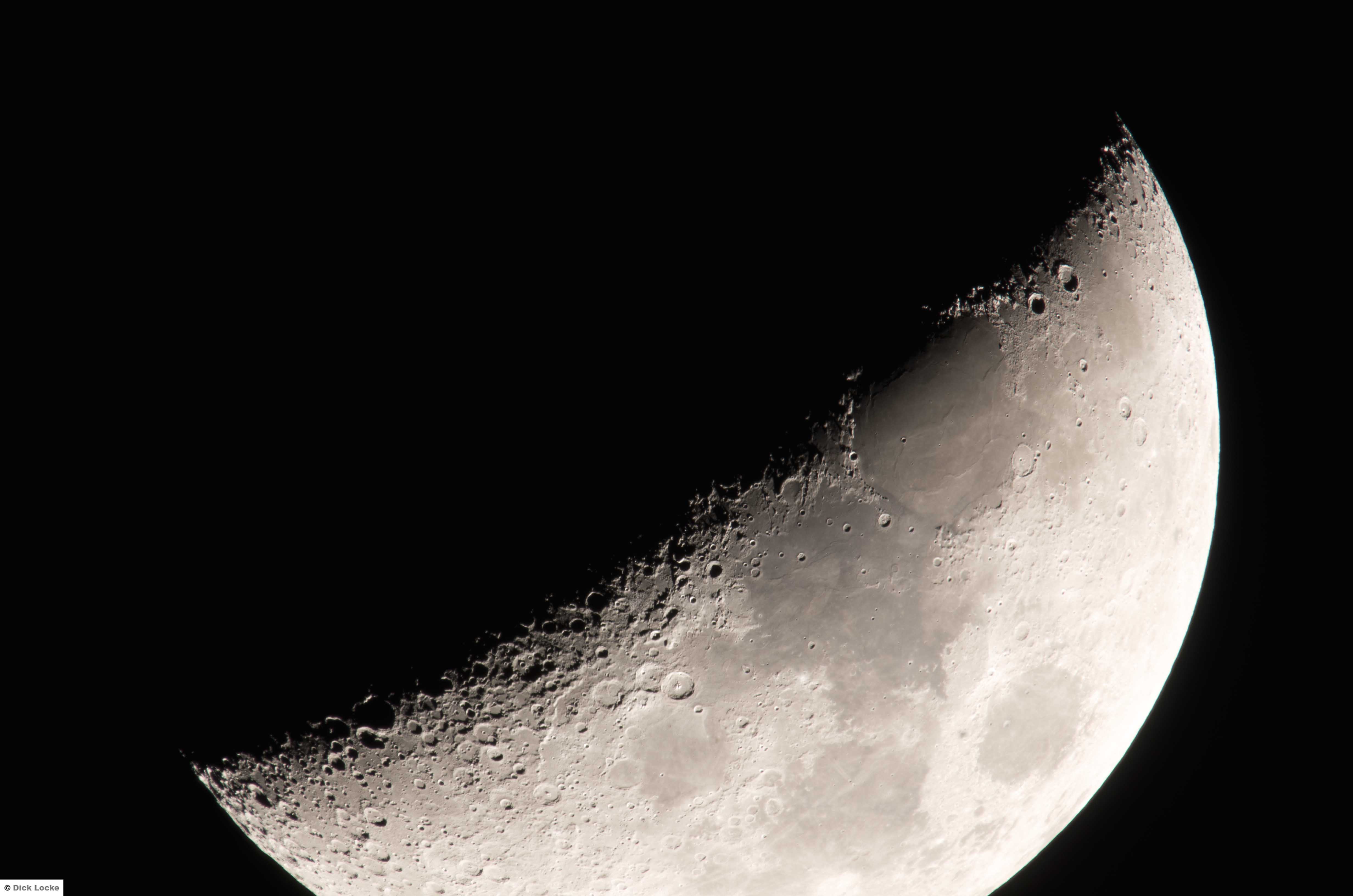
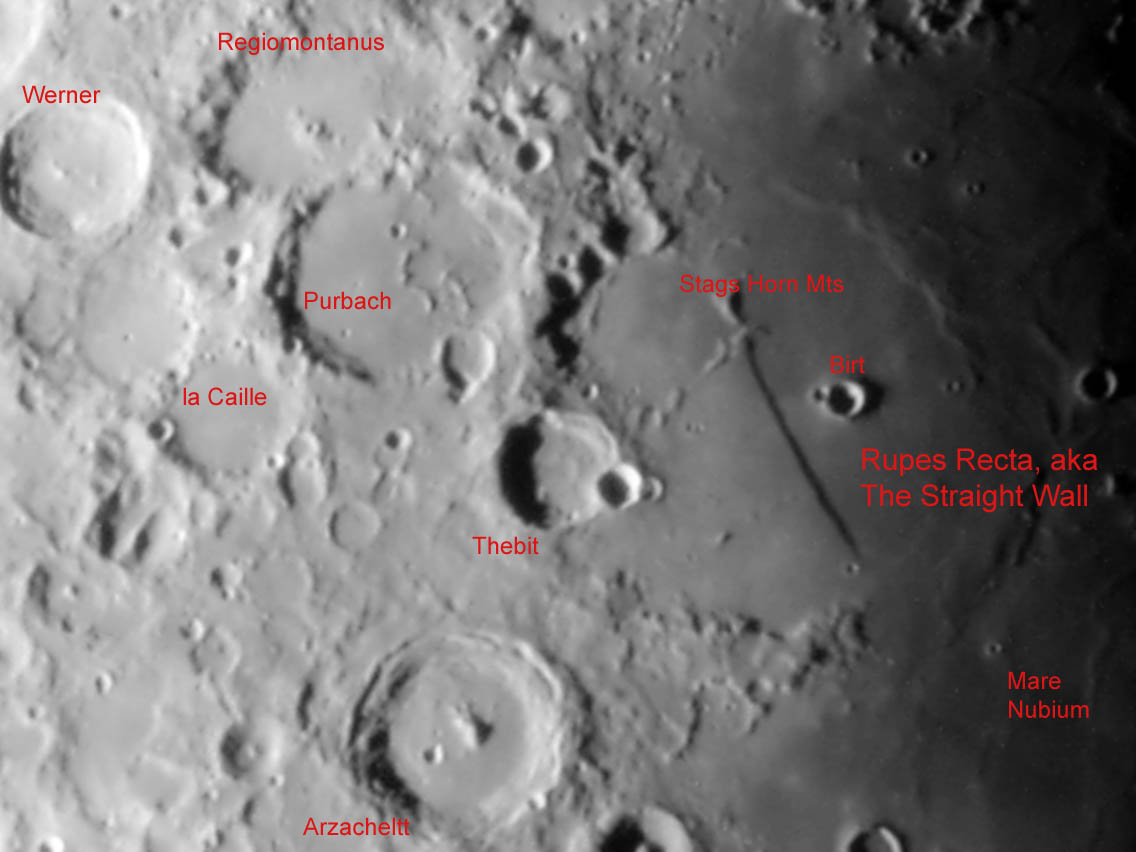
New 2/13, 6.8 day old moon with some labeled features. Rima Ariadaeus nicely shown.
See other versions below.
 The colorful Full Moon Moved to this Page |
| 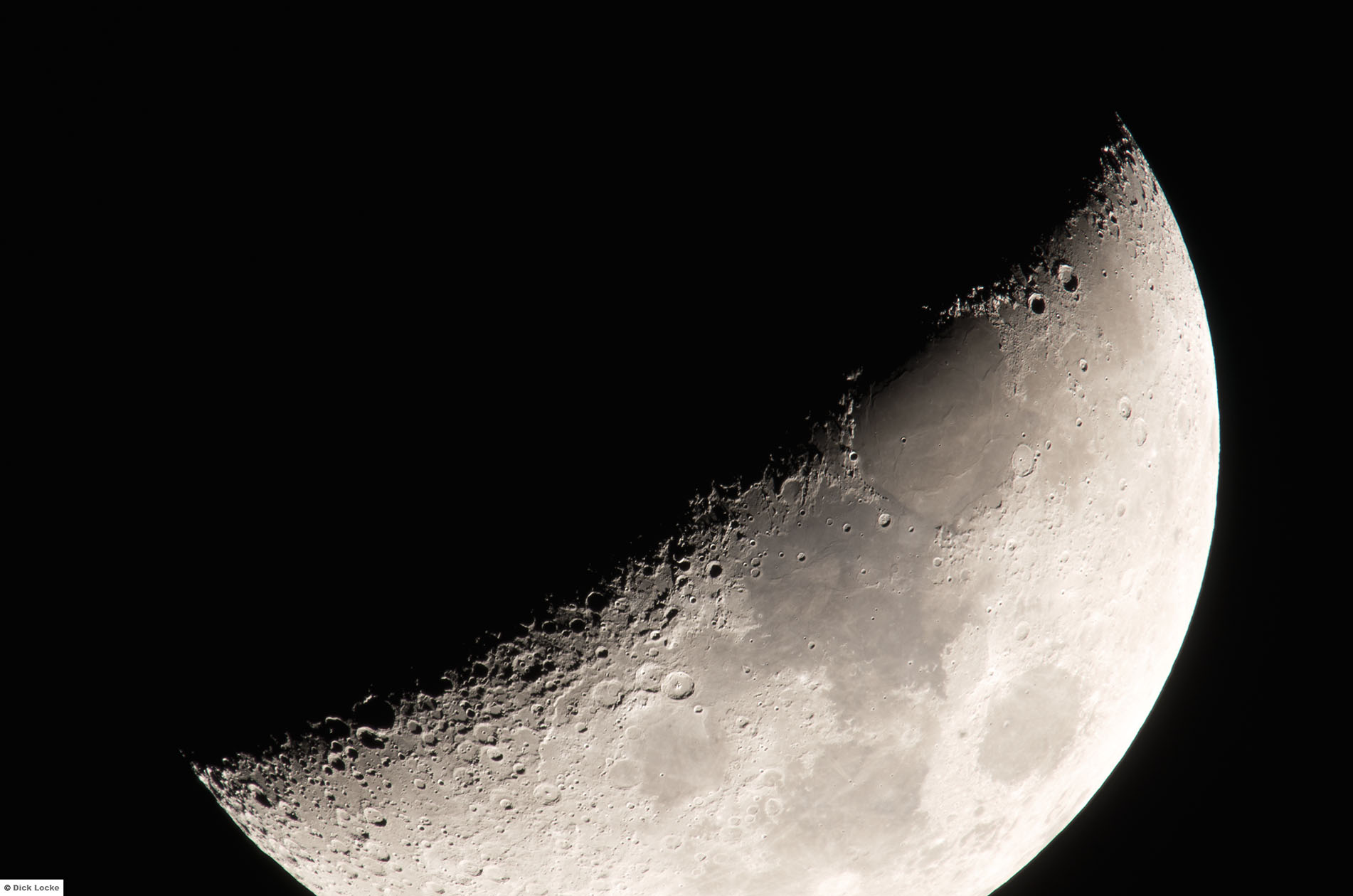 6.8 Day Moon, half size, no labels from 2/16/13 |
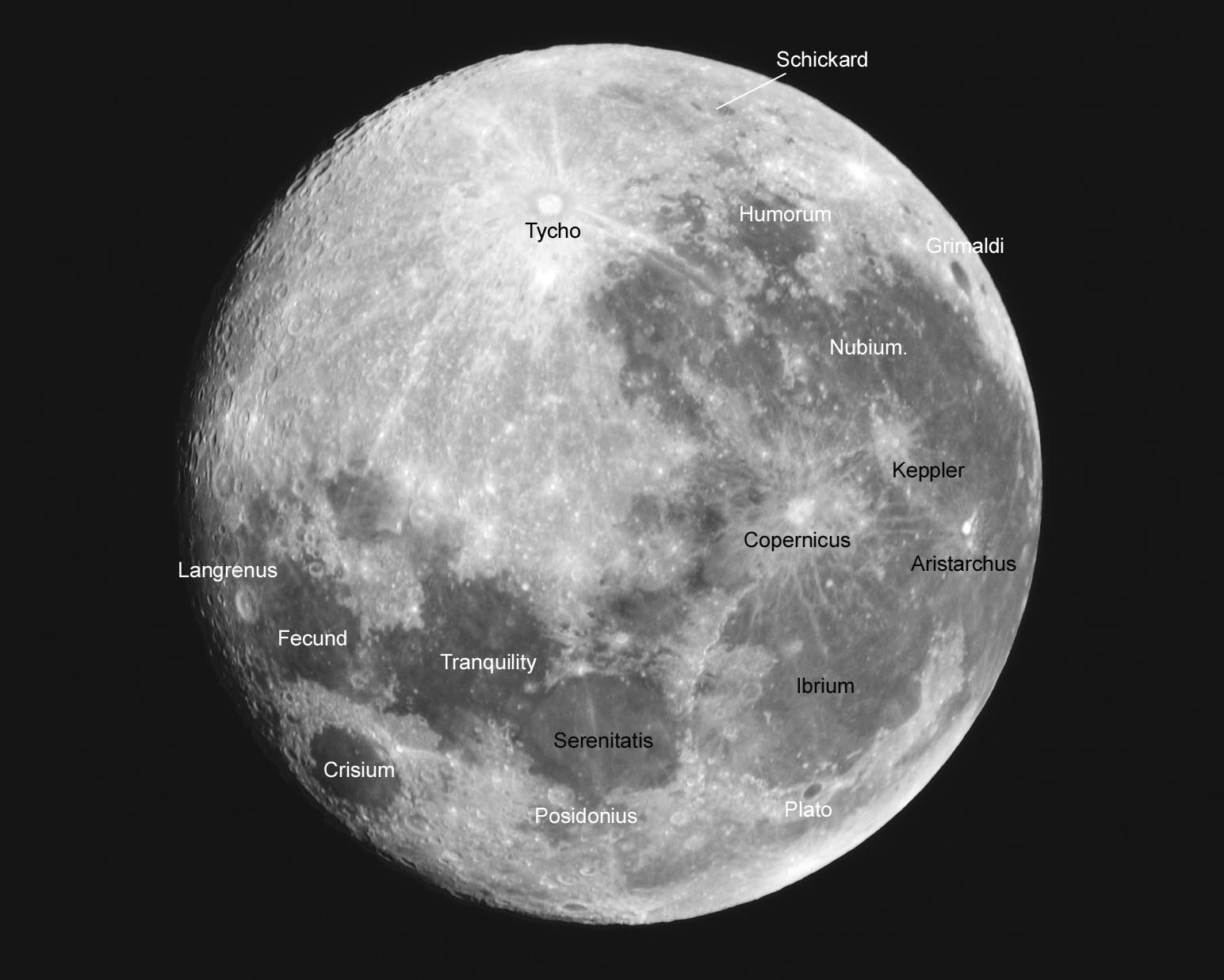 Hatfield (Mirror Image) Labels | 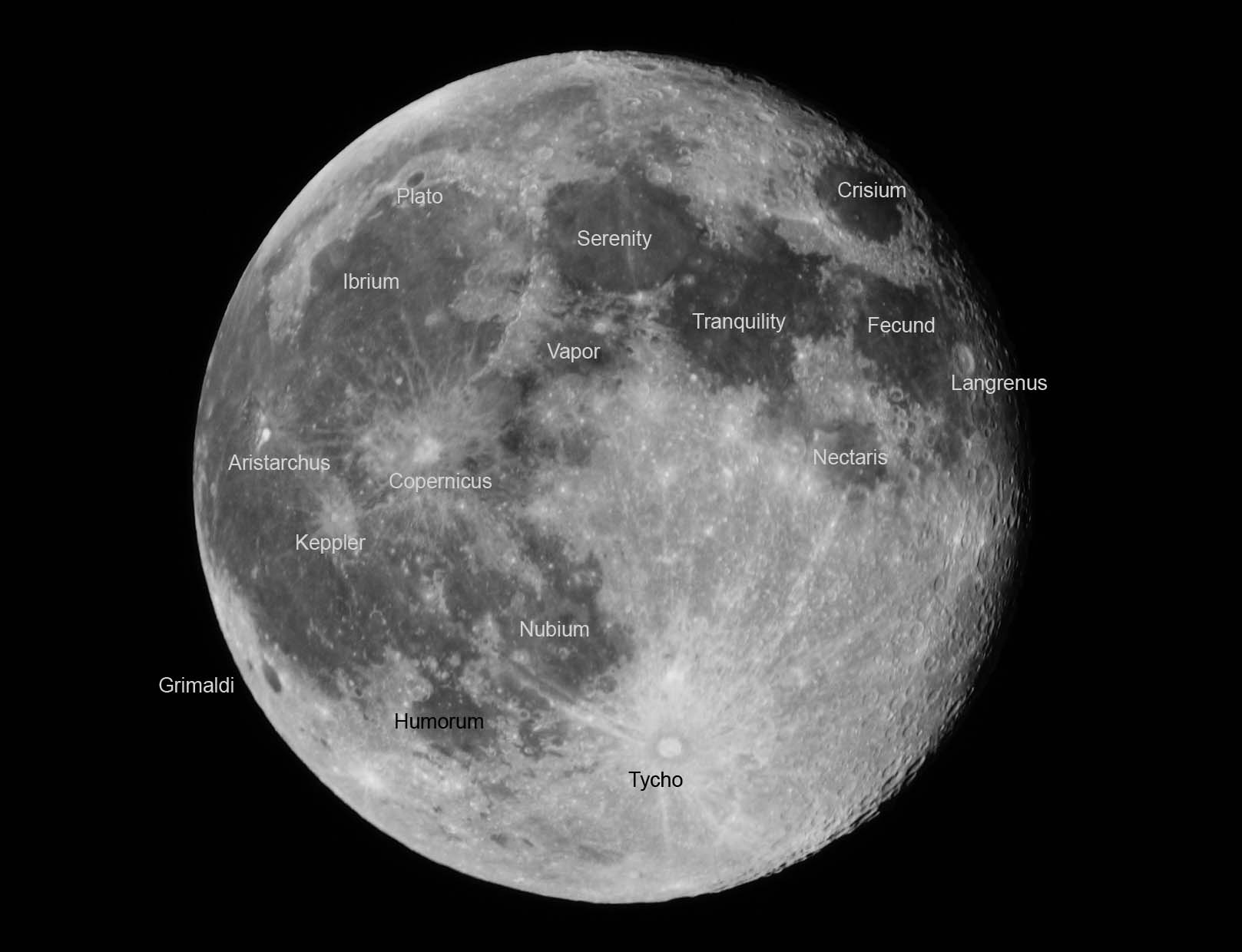 Rukl (Normal) Labels | 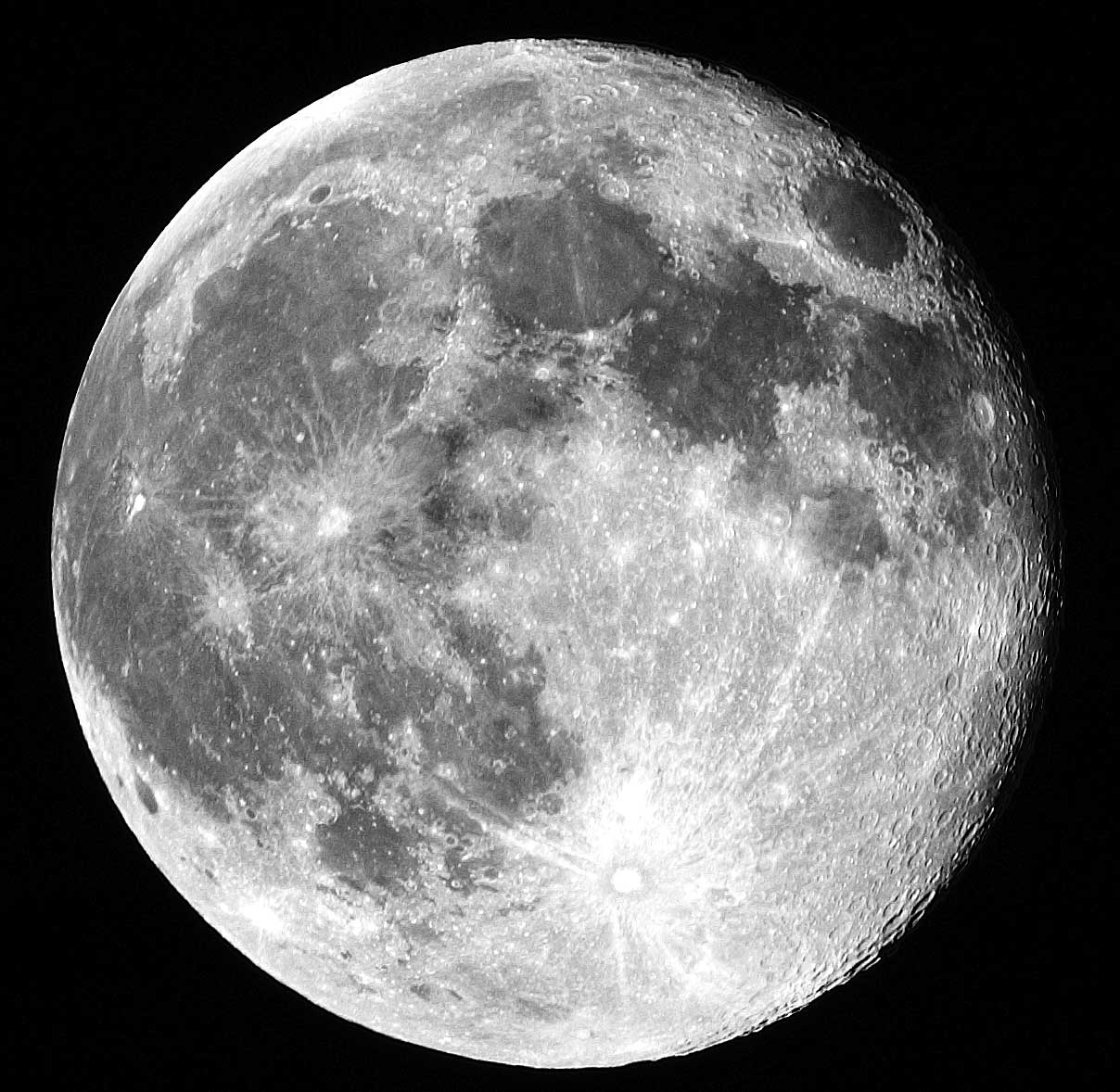 Big Moon - just after full, 11/27/04 1/200 sec, Takahashi TOA130 f7.7, fl=1000mm, Nikon D100, cropped, camera resolution |
 "The Straight Wall" or Rupes Recta 8 day 16 hr old Moon 2/20/2002 Hatfield (mirror) orientation |
|  Moon 4.6 days old. |
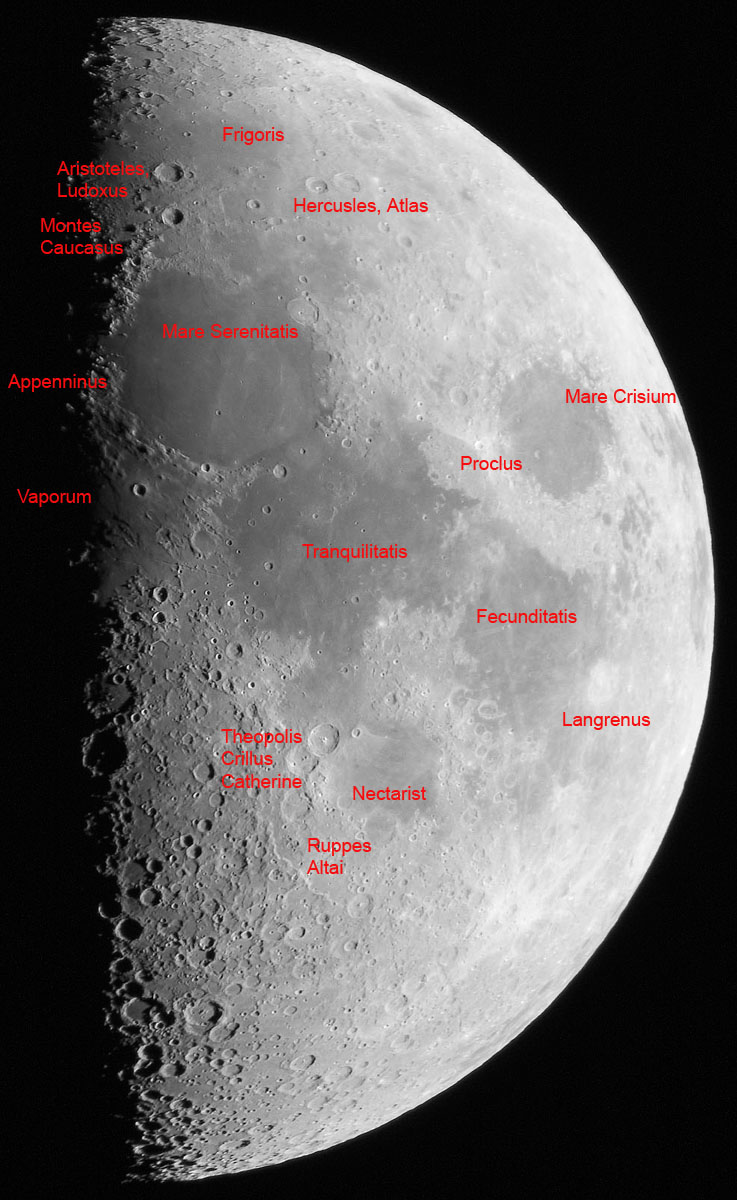 Above: 7 day old moon features labeled | . | 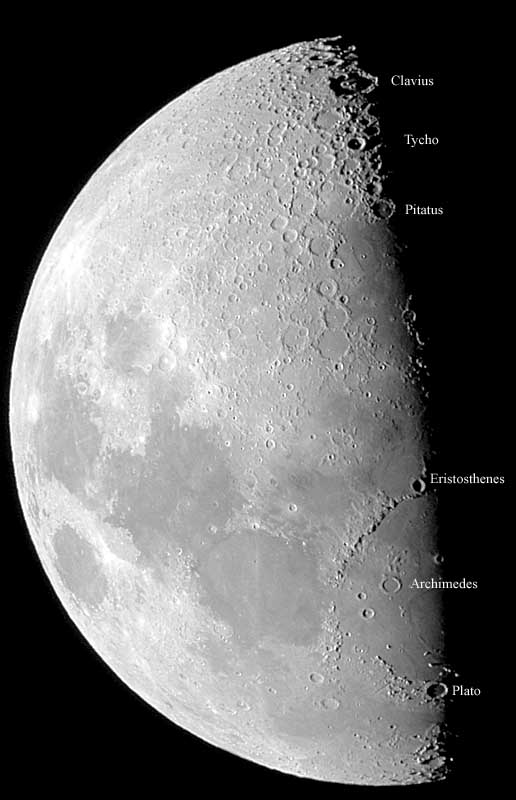 8 day old Moon labeled |
 11 day old moon labels | 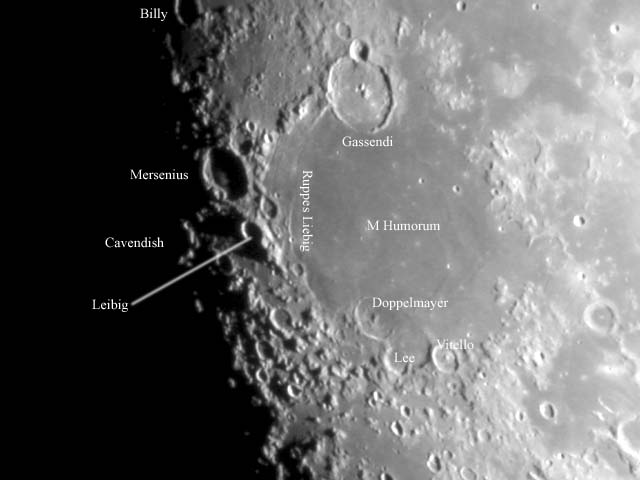 Gassendi, M Humorum Doppelmayer area. (11 day old moon) | 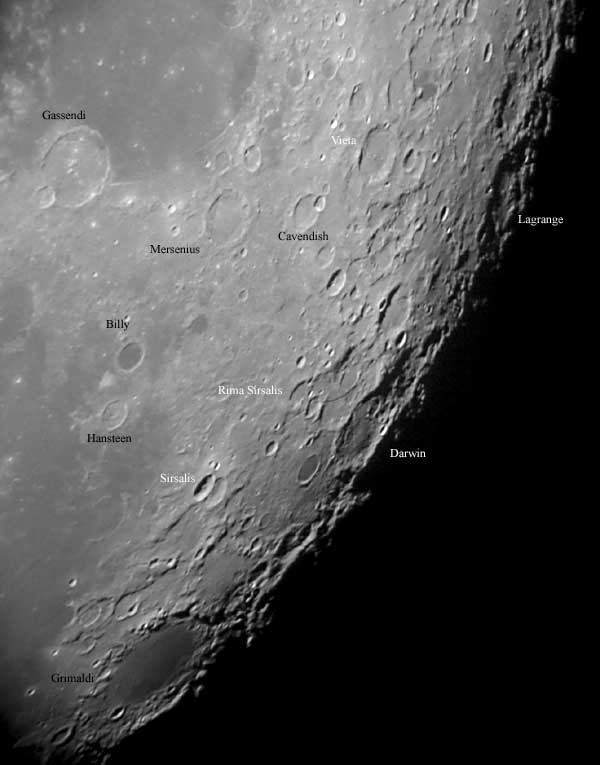 Annotated 13 days 14 hr. Moon. |
Rupes Recta - Straight Wall - Rupes are fault scarps, where tectonic action took place. This particular example is easy to see in just about any telescope. Look for it when the moon is 8-9 days old. It's located east of Birt in the eastern Mare Nubium. It runs for 130 km, rising about 240-300 meters high. It's just a moderate slope rather than a steep drop as it might appear.
Mirror Reversed Moon Maps: I've always had trouble orienting myself when observing the moon. My telescope shows a mirror reversed field, and most maps aren't drawn this way. This page has some reversed images, with labels that help you get oriented when viewing.
Equipment Notes: Takahashi telescopes, Olympus C4040 digicam and Nikon D100 DSLR cameras, Losamandy GM8 and G11 mounts.
Copyright © by Dick Locke. All Rights Reserved.
Contact and Image Use Information