HP Bird Pictures
Check the Woodpecker Page for More Pics
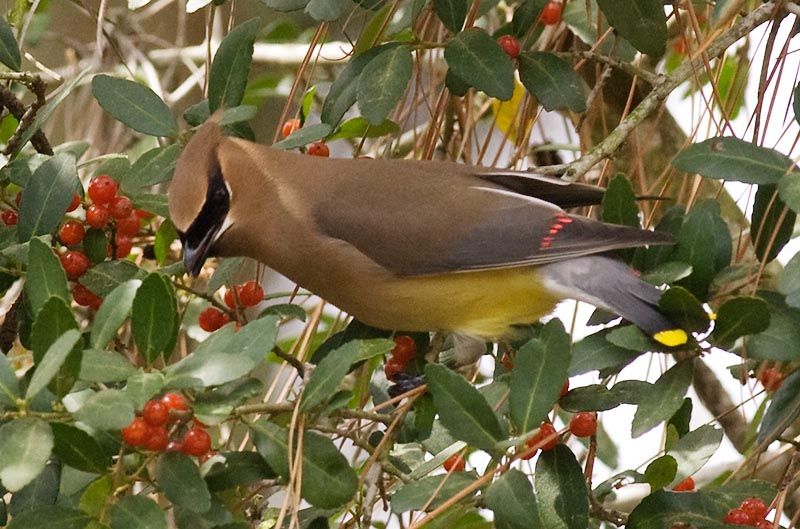
Waxwing from the front yard from The Woodlands, TX, March 12, 2011. There was a large bunch of them going after the berries, but they were spooked by me & the camera after only a moment of shooting.
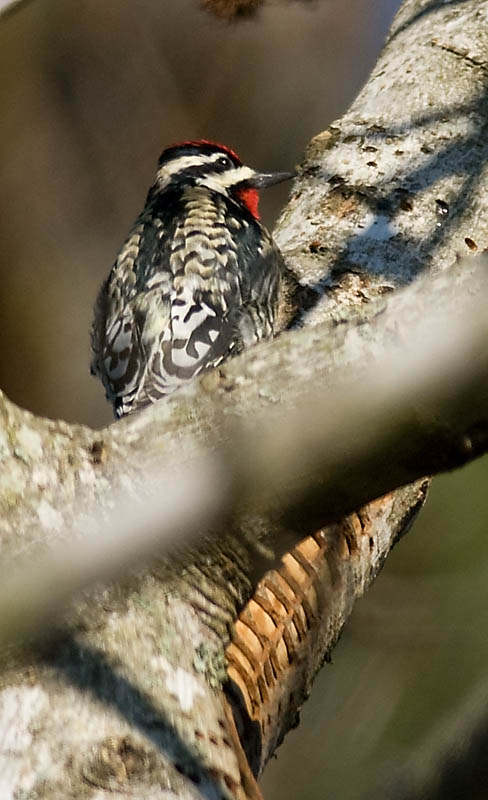
Through the Window: This little guy hangs out in the tree outside my 2nd story "computer room." The elusive sapsucker seldom gets into a position where I can shoot him without obstructions. Direct morning sunlight helped get this shot. Notice how well the bird's feathers blend in with the shadow dappled tree branches. Notice the tree bark area below right, which I believe is the handiwork of this guy. Above from March, 2010.
I though perhaps it was a Downy woodpecker and asked the expert. Gil once again nails the bird & behaviors: NOT a Downy woodpecker but a Yellow-bellied sapsucker, Sphyrapicus varius. The red throat identifies this individual as a male. Note the barring on the back of this woodpecker, where it would just be white on a Downy. Sapsuckers are shier, quieter, and more retiring than other woodpeckers. They make little holes in trees that drain sweet sap, and repeatedly return to these wells to feed. They are found in Texas only in the winter. As always, many thanks to Gil for the excellent commentary. Handheld shot from the computer room (upstairs). I get a clear shot now since our new double pane windows can open from the top or bottom. This is a huge plus for a photographer! I can open the top half of the window all the way and get an unobstructed view of the sweet gum tree outside. Image above Nikon D200, Nikon 300mm f4 at f4, 1/2500, ISO 250.
Latest above, June 2008 from Clute, TX. The consensus between Gil and Christina seems to be this is probably a young adult male molting into adult plumage. Nikon D200 and 300mm f4 ED lens with a monopod in difficult lighting. Don't miss the Big Woodpecker.
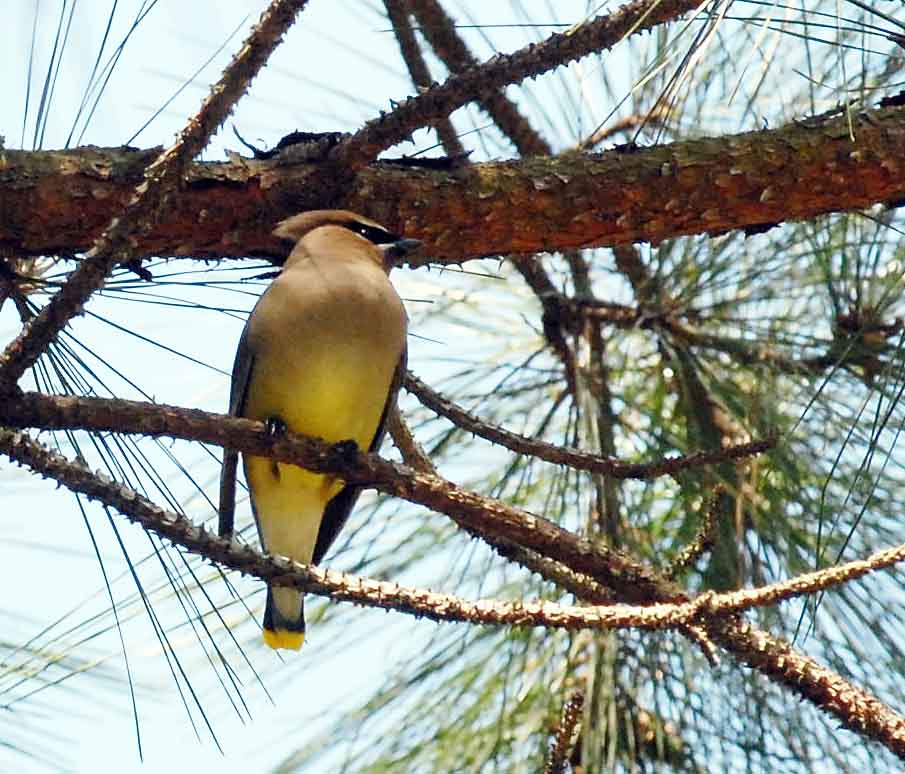
4/6/2008: The Cedar Waxwings were in the yaupon trees the other day, but they fled to the top tree branches when I appeared with my camera. I used the Nikon 300/f4 lens. These guys were ~20 feet high in the pine trees.
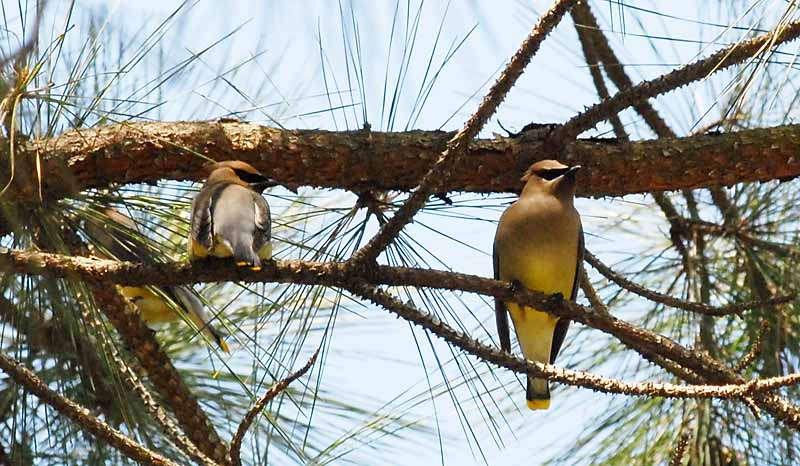
Cedar Waxwing Pair
1/19/2008: I grabbed the new Nikon 300mm ED f4 lens when I saw a some bird activity in the back yard on a nice Saturday morning and snapped off about 120 images. Here are a few that turned out OK. I like the lens! There's just the smallest trace of chromatic aberration ("purple fringing") when the conditions are brutal. Thanks again to Gil for all the bird (& tree) ID help!
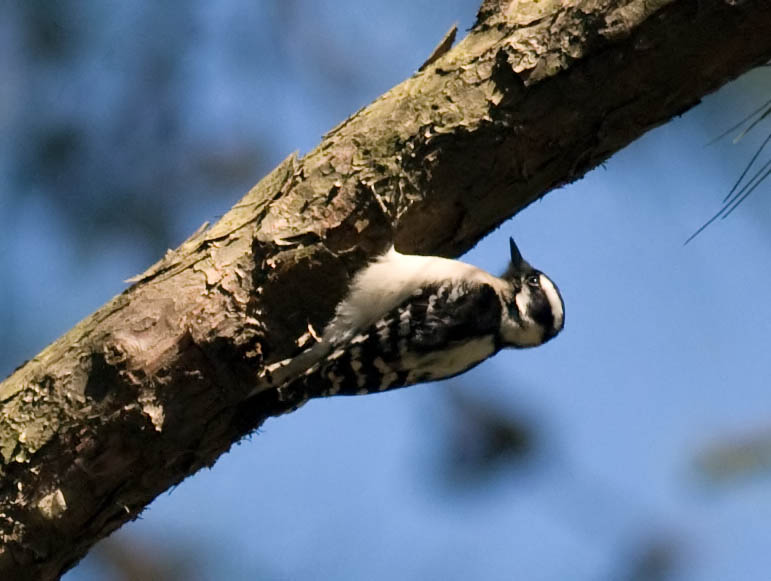
This is the first time I've seen or identified a Downy woodpecker. Not the greatest shot, but the best one of the bunch so far.
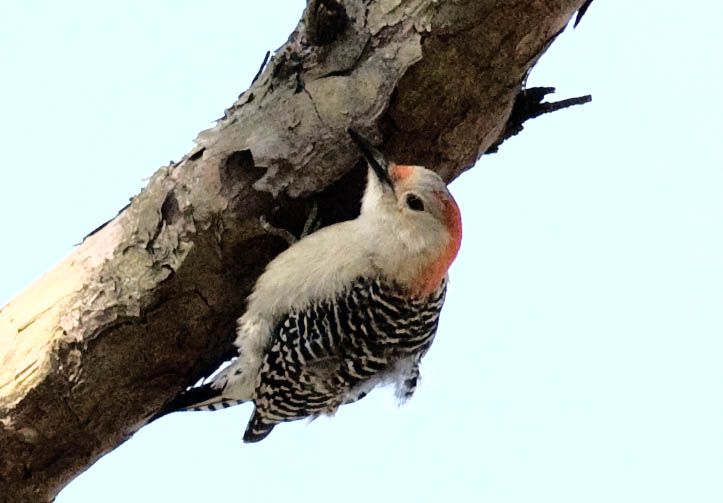
I have a better woodpecker picture here. These guys are amazing in their ability to climb up the underside of a branch. This guy is poking into the loose bark on the pine tree, looking for a tasty snack... Photo Notes: Shooting against the bright sky like this is very challenging for the optics. The 300 f4 did very will, but there is still a trace of edge coloration. The bird's fine feathers seem to have introduced some sort of issue causing blue, also. Not sure if that's feathers doing optical tricks or what.
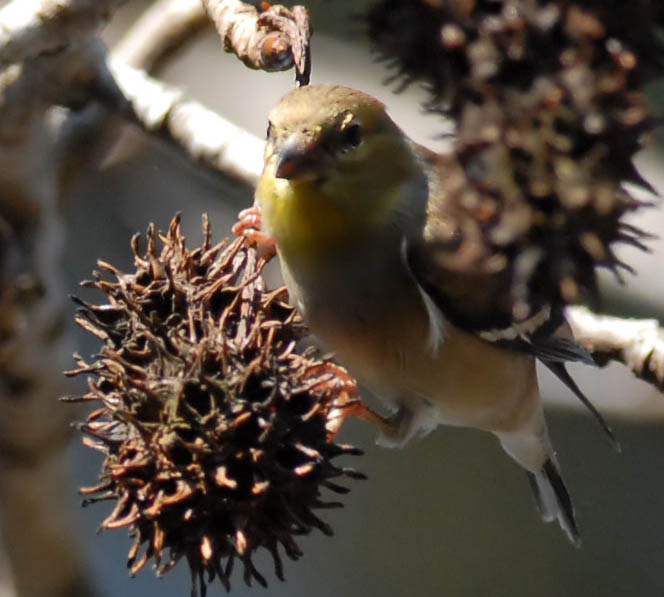
...on a sweetgum tree (Liquidamber styraciflua) in The Woodlands.

Titmouse checking for Spiders, moths, or anything else caught in the web that might be tasty!
Back to The Woodlands Back yard. Excuse the poor photo, but I had never seen birds do this before and I wanted to document the behavior. This little guy above was hinging upside-down, sticking it's head up under the overhang there. Gil E. was kind enough to explain this to me: "Your photo is of a Tufted titmouse. It is doing what my Oak titmice and Bewick's wrens regularly do at my house in Sacramento. It has learned that spiders build their webs in protected sites underneath eaves, so it is checking not only for spiders, but for moths that may have been caught in the spiders' webs. Gil"
Thanks for that insight Gil!
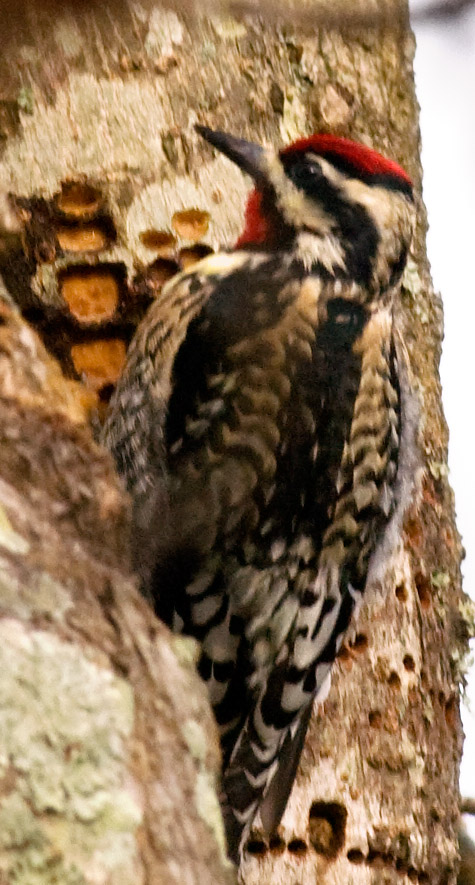
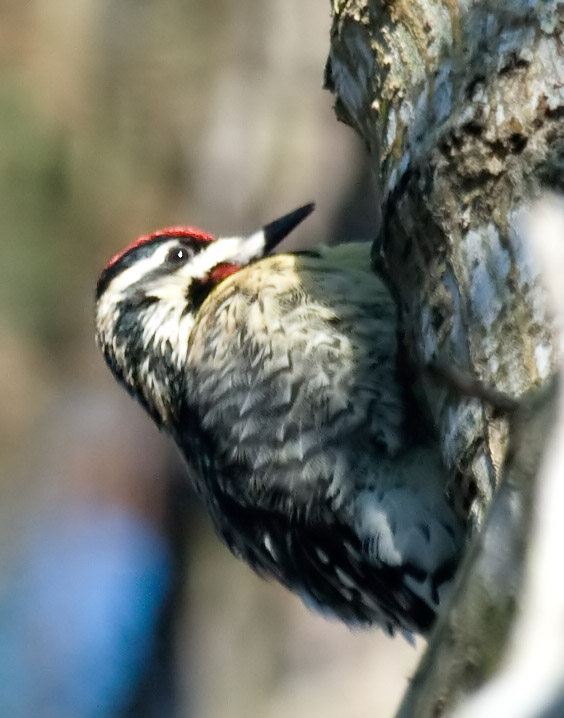
Check the hole patterns . This area, in the crook of the tree, seems to be a favorite. He's hanging out there for several hours at a time. He's well hidden by branches and it's tough getting a clear shot at him. First was hand-held, 1/160, with a a 300mm lens not using image stabilization. The second: Exposure 1/320 at f9, ISO 500, 300mm f4 lens; I'd have been better off shooting at a higher shutter speed on those.
More Bird pictures at this link: Brazos Bend 2007 trip (White Ibis, Little Blue Heron, Common Morhens, American Coots, Blackbellied Whistling Ducks, Red Earred Sliders (turtles)
You should check out the Hummingbird and the Big Woodpecker page, too, along with my "Main" Bird Picture Page
Copyright © Dick Locke. All Rights Reserved.
Image Use Information